One man's story of growing up mixed-Japanese in rural Canada.
It's
funny how you can think you know a lot about a subject then all of a
sudden something pops into to view that makes you look at things in a
completely different way. This is just how I felt when I stumbled across
the work of Jeff
Chiba Stearns, a Canadian animator using his inimitable talent to
explore issues of culture and identity.
His short film Yellow Sticky Notes
(2007) seen here, is a reflection of this tunnel vision. When you are
slave to your own productivity devices, to-do lists and buckets you
become oblvious to the bigger picture. Jeff's classically animated
traditional film was hand drawn with black pen on over 2300 yellow
sticky notes.
Yellow Sticky Notes
is winner of 11 awards
including the Prix du Public Labo at the 2009 Clermont-Ferrand Short
Film Festival, 2009 Best Animated Short at the Beloit and Victoria
Int. Film Festivals, 2008 CAEAA for Best Animated Short Subject, Best
Animated Short Film at the Calgary International Film Festival, and
Golden Sheaf for Best Animation. The film also qualified for the
2009 Genie Awards under the category of Best Short Animation.
In
his directors
notes he gives us an insight into the painstaking process of
combining fresh illustration and stream-of-conciousness with to-do lists
he had compiled over 9 years of trying to get his animation career of
the ground. Perhaps unwittingly during that time Jeff has also become a
champion for multiracial issues, having lectured around the world on
topics of identity, cultural awareness, filmmaking, and animation.
His short film What are you
anyways?, winner of the 2006 ELAN for Best Animated Short Subject,
expands upon the themes of growing up half Japanese, half Euro Mutt (his
words) in rural Canada. As the father of two Hapa (mixed Japanese kids)
I was encouraged by the sensitivity and courageous style Jeff employed
in telling his story of growing up. When my kids are old enough to be
conscious of their differences from other kids his film will be required
viewing.
Jeff is now working on a feature length documentary
called One
Big Hapa Family, about children of mixed Japanese decent and the
high Japanese-Canadian interracial marriage rate. On his mother's
Japanese side of the family her six sisters married white men, much to
his grandfather's chagrin. I expect bigs things from Jeff, and from the
comments on his
Facebook page I suspect so do his followers.
Do you belong to
the One Big Hapa Family? How do you broach these topics of culture and
and identity with your kids? Please watch some of Jeff's short films and
share how you feel about them in the comments.
--
Thanks for following, I really appreciate your time here.
Showing posts with label culture. Show all posts
Showing posts with label culture. Show all posts
Saturday, May 22, 2010


Tuesday, February 02, 2010
Your Guide to The Ultimate Setsubun Party
Scattering Beans and Eating Ehomaki to See in Spring
The Japanese Festival of Setsubun celebrates the coming of spring. Each year about the 3rd or4th of February people gather to ward off evil spirits and invite good fortune into their lives. Like most festivals in Japan there is a fair amount of superstition and some ritual involved, but it's all good clean fun, especially for kids.
![Day 034 / 七福恵方巻き食べた。 February 03 by [puamelia].](https://lh3.googleusercontent.com/blogger_img_proxy/AEn0k_u3fPPc_2kguAOR0-YvNOZtVITDd86WgCUK-jjRhe4RgN5Y5aXpyOXmniCgLIL8S9Gm62MH9PA3_aNBhFW5t4X3oosRuuNL4AklcmNx5_ONqPw_yHfvP8pxwU-k45imCQ=s0-d)
七福恵方巻き食べた。 by [puamelia].
The tradition of eating specially prepared rolled sushi (恵方まき | ehomaki) while facing in the new years lucky direction originated in Kansai. This year the direction to face is a little to the right of West, So'West. (2010年の恵方は「西南西」). It is customary to eat the whole roll in one go while making a wish.
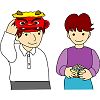
The special ritual to ward off evil spirits is called mamemaki (豆まき | bean scattering) and is usually done by the toshiotoko (年男 | senior male) or the male who was born in the current chinese calendar year. Beans are thrown in the direction of a less fortunate member of the family wearing a demon mask.
Follow a few of these simple steps and you could have Setsubun party to remember for your household or your neighbourhood.
 Make a demon mask: Oni-no-men (鬼の面 | Demon mask) are easy enough to make out of paper or card. If you're the creative type you can get a few good ideas from a Google image search for 鬼の面. You can you print out this paper craft oni-no-men on the Kids goo site to colour in later, or save time by doing it online. There's even a full craft set for setsubun with instructions. I'm going for a slightly scarier mask from Yamaha paper craft for all seasons.
 Prepare ehomaki: Preparing sushi needn't be just for the foodies, and rolling it yourself always brings satisfaction, for me anyway. There are stores that prepare special once a year ehomaki, for which people queue for hours before dawn, but you don't need to go to any extremes. If you're game try this ehomaki recipe from cookpad, Japan's most popular recipe site. Or for a comprehensive look at tips and techniques for making maki sushi at home visit the Sushi Faq.
 Decide who your demon is going to be before things get underway, the element of surprise is most important if you're going to have the most fun. The party begins with the customary scoffing of the ehomaki. Stand facing a little to the right of West So'West, this year's lucky direction, to eat your sushi while making a wish. Make a big wish because it could take a while, it's important to finish the whole roll without stopping.
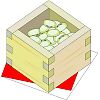
 During the rest of your meal, which might be something as simple as sardines on rice, count enough roast soybeans for each year of your age plus one for good luck. The surplus beans are gathered up and placed in ceremonial cups (paper will do) in preparation for scattering. As you eat your beans take time out for reflection. Once you're done pick up your paper cups and head towards a door or open window to begin the bean scattering ceremony.
 It is usually at this time that the demon appears and the chant rises up to cast out evil and bring in luck. Toss your beans at the demon while chanting "Oni wa soto, Fuku wa Uchi!" (鬼は外! 福は内! | Out with the Devil! In with good fortune!). In the Fukushima region family members yell "Oni no medama buttsubuse!" (鬼の目玉ぶっつぶせっ! | Demon's eyes, crush crush!). You may want to choose your own local version too!
Have you experienced Setsubun before? Do you plan to do anything this year? Post some photos of your favourite demon mask on the Rainbowhill Facebook Fan Page and join in the conversation.
Setsubun images courtesy of http://illpop.com/
The Japanese Festival of Setsubun celebrates the coming of spring. Each year about the 3rd or4th of February people gather to ward off evil spirits and invite good fortune into their lives. Like most festivals in Japan there is a fair amount of superstition and some ritual involved, but it's all good clean fun, especially for kids.
七福恵方巻き食べた。 by [puamelia].
The tradition of eating specially prepared rolled sushi (恵方まき | ehomaki) while facing in the new years lucky direction originated in Kansai. This year the direction to face is a little to the right of West, So'West. (2010年の恵方は「西南西」). It is customary to eat the whole roll in one go while making a wish.
The special ritual to ward off evil spirits is called mamemaki (豆まき | bean scattering) and is usually done by the toshiotoko (年男 | senior male) or the male who was born in the current chinese calendar year. Beans are thrown in the direction of a less fortunate member of the family wearing a demon mask.
Follow a few of these simple steps and you could have Setsubun party to remember for your household or your neighbourhood.
Preparing your bean scattering party

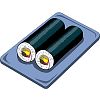 Prepare ehomaki: Preparing sushi needn't be just for the foodies, and rolling it yourself always brings satisfaction, for me anyway. There are stores that prepare special once a year ehomaki, for which people queue for hours before dawn, but you don't need to go to any extremes. If you're game try this ehomaki recipe from cookpad, Japan's most popular recipe site. Or for a comprehensive look at tips and techniques for making maki sushi at home visit the Sushi Faq.
Throwing the party, eating sushi and scattering beans to see in Spring

Have you experienced Setsubun before? Do you plan to do anything this year? Post some photos of your favourite demon mask on the Rainbowhill Facebook Fan Page and join in the conversation.
Setsubun images courtesy of http://illpop.com/
Sunday, January 17, 2010
The Influence of Mas Oyama on This Boy's Karate
Japan Blog Matsuri - Famous Japanese People - Mas Oyama
On the theme of Famous Japanese People a Korean born man by the name of Choi Yeong-eui may not seem like a logical choice. After getting the nod from @reesan I couldn't resist posting about a man who shaped my concept of Japanese culture. If Japan is to survive the next 100 years it will certainly need to embrace more outsiders like Mas Oyama.
When I started training in the martial arts at the tender age of 5, my father gave my brother and I a book called "Boys' Karate". The book was similar to a boy's annual, with lots of illustrations to accompany the stories it told. The exploits of boys our age seemed similar, yet were told upon the backdrop of a strange and exotic land of rice fields and bamboo groves.
 The tales were in keeping with a much deeper philosophy of martial arts that I was only to recognise much later in my development. The book was written by Mas Oyama, a Zainichi Korean that was the founder of Kyokushin kaikan, a martial art that for many would come to define Full Contact Karate. His teachings and my life long practise of martial arts would ultimately lead me to visit Japan.
As a boy I was raised on Bushido and tales of Samurai and Shogun. My father taught lessons in a traditional style of martial art popular with bikies and bouncers. Every day there was some form of physcial training and some violence. It was a pretty tough way to grow up.
I imagine that for a Korean born during a brutal Japanese occupation my childhood would have been nothing compared to the hardship Oyama endured. At the age of 9 his parents sent him to Manchuria to live on his sisters farm, where he began learning martial arts from a seasonal worker named Lee.
One of the earliest stories I was told, during practice for a high jumping contest no less, was that Lee gave the young Oyama a seed to plant. When the seed sprouted Lee gave him the instruction to leap over it a hundred times a day. As it grew into a plant Oyama continued his practice and later said, "I was able to leap back and forth between walls easily."
As a young man he joined the Japanese Airforce and saw many of his friends sacrifice their lives as kamikaze. When the war ended he grew disaffected at being denied a place among Japanese society. He was pursued by the Japanese Police as a member of a political organisation for the reunification of Korea. He trained in Shotokan and Gojuryu styles of Karate and gained a reputation as a loner and a brawler for his street fights with US Military Police.
Eventually the constant harrassment took its toll, following the suggestion of a friend, he retreated to the mountains to perfect his fighting style. He eventually founded Kyokushin years later in 1953.
During the foundation of his martial art Oyama would invite people to fight him in public demonstrations. Legend has it that in one three day kumite he fought 300 men. He earnt the nickname 'god-hand' for his practice of killing bulls with a single punch. Even today Kyokushin bears the mark of its founder, as global tournaments are full contact and open to all-comers. Thankfully, to the best of my knowledge his followers no longer travel around fighting and killing bulls with their bare hands.
I admire him though not for his immense physical power, but for his contribution to the spiritual way of the warrior, Bushido.
This philosophy echoes that of Miyamoto Musashi the author of the Book of Five Rings, who according to Oyama;
Mas Oyama spent most of his life in Japan and chose to become a Japanese citizen in 1964. He is the focus of my post for the January 2010 Japan Blog Matsuri hosted thanks to Lee (@reesan on Twitter) at loneleeplanet. You can find out more at the Japan Blog Matsuri FAQ page.

 Boys' Karate by Masutatsu Oyama is now a sought after collectors item. I asked a former flatmate if he'd seen it and this was his response.

Photograph: Masutatsu Oyama! by KEMPO!
On the theme of Famous Japanese People a Korean born man by the name of Choi Yeong-eui may not seem like a logical choice. After getting the nod from @reesan I couldn't resist posting about a man who shaped my concept of Japanese culture. If Japan is to survive the next 100 years it will certainly need to embrace more outsiders like Mas Oyama.
When I started training in the martial arts at the tender age of 5, my father gave my brother and I a book called "Boys' Karate". The book was similar to a boy's annual, with lots of illustrations to accompany the stories it told. The exploits of boys our age seemed similar, yet were told upon the backdrop of a strange and exotic land of rice fields and bamboo groves.
 The tales were in keeping with a much deeper philosophy of martial arts that I was only to recognise much later in my development. The book was written by Mas Oyama, a Zainichi Korean that was the founder of Kyokushin kaikan, a martial art that for many would come to define Full Contact Karate. His teachings and my life long practise of martial arts would ultimately lead me to visit Japan.
As a boy I was raised on Bushido and tales of Samurai and Shogun. My father taught lessons in a traditional style of martial art popular with bikies and bouncers. Every day there was some form of physcial training and some violence. It was a pretty tough way to grow up.
"Keep your head low,
eyes high and mouth shut;
base yourself on filial piety
and benefit others."
eyes high and mouth shut;
base yourself on filial piety
and benefit others."
I imagine that for a Korean born during a brutal Japanese occupation my childhood would have been nothing compared to the hardship Oyama endured. At the age of 9 his parents sent him to Manchuria to live on his sisters farm, where he began learning martial arts from a seasonal worker named Lee.
One of the earliest stories I was told, during practice for a high jumping contest no less, was that Lee gave the young Oyama a seed to plant. When the seed sprouted Lee gave him the instruction to leap over it a hundred times a day. As it grew into a plant Oyama continued his practice and later said, "I was able to leap back and forth between walls easily."
As a young man he joined the Japanese Airforce and saw many of his friends sacrifice their lives as kamikaze. When the war ended he grew disaffected at being denied a place among Japanese society. He was pursued by the Japanese Police as a member of a political organisation for the reunification of Korea. He trained in Shotokan and Gojuryu styles of Karate and gained a reputation as a loner and a brawler for his street fights with US Military Police.
Eventually the constant harrassment took its toll, following the suggestion of a friend, he retreated to the mountains to perfect his fighting style. He eventually founded Kyokushin years later in 1953.
"The heart of our karate is real fighting.
There can be no proof without real fighting.
Without proof there is no trust.
Without trust there is no respect.
This is a definition in the world of Martial Arts."
There can be no proof without real fighting.
Without proof there is no trust.
Without trust there is no respect.
This is a definition in the world of Martial Arts."
During the foundation of his martial art Oyama would invite people to fight him in public demonstrations. Legend has it that in one three day kumite he fought 300 men. He earnt the nickname 'god-hand' for his practice of killing bulls with a single punch. Even today Kyokushin bears the mark of its founder, as global tournaments are full contact and open to all-comers. Thankfully, to the best of my knowledge his followers no longer travel around fighting and killing bulls with their bare hands.
I admire him though not for his immense physical power, but for his contribution to the spiritual way of the warrior, Bushido.
"Although it is important to study and train for skill in techniques, for the man who wishes to truly accomplish the way of Budo, it is more important to make his whole life in training and therefore not aiming for skill and strength alone, but also for spiritual attainment."
This philosophy echoes that of Miyamoto Musashi the author of the Book of Five Rings, who according to Oyama;
"said that he had no regrets about what he did. If you have confidence in your own words, aspirations, thoughts, and actions and do your very best, you will have no need to regret the outcome of what you do. Fear and trembling are the lot of a person who, while stinting effort, hopes that everything will come out precisely as he wants it to."
Mas Oyama spent most of his life in Japan and chose to become a Japanese citizen in 1964. He is the focus of my post for the January 2010 Japan Blog Matsuri hosted thanks to Lee (@reesan on Twitter) at loneleeplanet. You can find out more at the Japan Blog Matsuri FAQ page.
Boys' Karate by Masutatsu Oyama is now a sought after collectors item. I asked a former flatmate if he'd seen it and this was his response.Photograph: Masutatsu Oyama! by KEMPO!
Friday, May 15, 2009
Knowledge Bubbles up from Within
Drawn from the spring behind the monk's quarters at Ryōan-ji in Kyoto, this tsukubai, or hand basin, inspires this post. It is inscribed with the words “I know, I alone am sufficient” which are attributed to Dōgen, founder of Sōtō Zen.

A couple of weeks ago a student asked me to write a story that showed life in Japan was survivable. I'd like to dedicate this post to that student, and say that not only is life in Japan (anywhere for that matter) survivable, but it is thrive-able with the right attitude.
I'm not sure if I can be inspirational, so I'll just try and be myself and write about a place that I go to that gives me inner strength. Not so much physical space, but a state of mind.
[Edit: 21st May 2009 - This should have been entered in the Japan Blog Matsuri a week ago when I first posted.
Oh well, better late than never.]

When I left for Japan in 2003, I was not in a very good financial position. I had several part time jobs, but none of them had any security or enough pay. Only a year earlier I had returned from a world trip that started in New Zealand, where I worked as a software developer, then on to Hong Kong, and Shanghai before winding up in London.
I worked hard but I also partied hard, there was a lot that I wanted to put behind me, and with the dot com boom bust cycle in bust, not a lot to look forward to. It came as no surprise that a few people frowned on my leaving my home town Brisbane for Japan so soon after returning. Some said I was just running away from things. It felt different to me, I felt as though for once I was running towards something.
I had always wanted to live in Japan, ever since reading Mas Oyama's book, Boy's Karate, and practicing traditional martial arts with my father. Now I finally had that chance to practice martial arts, learn the language, and become more than just a stranger passing through.
I tried very hard to rid myself of all my preconceptions of what life would be like once I got there. I made a pact with myself to see out at the very least the first year, and hopefully the second year. I also put a maximum limit on my time there, to avoid become listless again. I wanted to feel as though I had some goals and direction, so I made a 5 year plan.
I knew no-one, apart from the other English teachers that lived in our apartment block. I had the perfect opportunity to pour my attention into study. I signed up for free classes at the local international centre and got my books out every morning for a couple of hours. Everywhere I went I carried a phrasebook, and almost every chance I had I bothered the locals with my broken Japanese. Within a month or two, I had mastered the kana and had begun to speak in stock phrases to the Japanese staff.
My days off were mid week, so while the others were at work, I would jump on the trains and go adventuring, day trips to the onsen, over-nighters to Osaka and Kyoto, sometimes hiking through the many mountains between Mie and Nara. Mostly alone, always with my books and my camera. About 6 months later a girlfriend from Australia came to live with me and we found a cheap apartment in a small town for the two of us. So for me the adventure started all over again, this time as the guide.
One of the first places we visited together was a Ryōan-ji, the temple where I had snapped the photo above, which is probably more famous for it's dry rock garden or karesansui. The tsukubai, is behind the monks quarters at a small distance from the temple. At first I was more interested in the composition, not so much the inscription in the stone. This time I was becoming more comfortable with Kanji through the use of a good Kanji dictionary, so I paid more attention to it. The inscription is attributed to Dōgen, founder of Sōtō Zen and can be translated as "I know, I alone am sufficient".
 Looking closely at the inscription on the mouth of the basin, it is not immediately apparent what the kanji are. They appear to be fragments until you realise the mouth (kuchi) forms forms a part of each kanji. When read in combination the reading becomes
Kanji details for 吾 - Denshi Jisho
吾 われ ゴ
I; my; one's own; our
Each of us is caught up with our limitless desires. With our inherently self-centered nature, Even at the table after dinner, with our stomachs full, it is easy to imagine the mountains of food that we would like to eat. Can seperate ourselves from the consumption (口)of the material world through our five (五)senses?
Kanji details for 唯 - Denshi Jisho
唯 ただ ユイ
merely; only; simply; solely
It is said that the person who knows satisfaction, has a calm spirit, and the person who doesn't know satisfaction, has a disturbed spirit. Is the robin satisfied with eating just one one chestnut?
Kanji details for 足 - Denshi Jisho
足 あし ソク
be sufficient
If you are seeking a peaceful spirit is by all means essential to comprehend the spirit of thankfulness, sufficiency and tolerance. Is it possible to find peace with just two feet and a hungry mouth?
Kanji details for 知 - Denshi Jisho
知 しる チ
Know
Words of wisdom are like arrows shot from the mouths of sages. It is difficult to comprehend their message if you aren't listening.
I did a quick search and found an explanation of the concept behind the expression.
For the austere person, practice can be a path to enlightenment. For the rest of us, daily practice and reflection can yield results just as the smoothest flowing stream cuts through the hardest rock over time.
Lately this phrase has come to give me strength to continue, even though conditions may be tough. It has taught me self reliance.
Where do you draw strength?
A couple of weeks ago a student asked me to write a story that showed life in Japan was survivable. I'd like to dedicate this post to that student, and say that not only is life in Japan (anywhere for that matter) survivable, but it is thrive-able with the right attitude.
I'm not sure if I can be inspirational, so I'll just try and be myself and write about a place that I go to that gives me inner strength. Not so much physical space, but a state of mind.
[Edit: 21st May 2009 - This should have been entered in the Japan Blog Matsuri a week ago when I first posted.
Oh well, better late than never.]
Scattered Spirit
When I left for Japan in 2003, I was not in a very good financial position. I had several part time jobs, but none of them had any security or enough pay. Only a year earlier I had returned from a world trip that started in New Zealand, where I worked as a software developer, then on to Hong Kong, and Shanghai before winding up in London.
I worked hard but I also partied hard, there was a lot that I wanted to put behind me, and with the dot com boom bust cycle in bust, not a lot to look forward to. It came as no surprise that a few people frowned on my leaving my home town Brisbane for Japan so soon after returning. Some said I was just running away from things. It felt different to me, I felt as though for once I was running towards something.
I had always wanted to live in Japan, ever since reading Mas Oyama's book, Boy's Karate, and practicing traditional martial arts with my father. Now I finally had that chance to practice martial arts, learn the language, and become more than just a stranger passing through.
I tried very hard to rid myself of all my preconceptions of what life would be like once I got there. I made a pact with myself to see out at the very least the first year, and hopefully the second year. I also put a maximum limit on my time there, to avoid become listless again. I wanted to feel as though I had some goals and direction, so I made a 5 year plan.
Seeking Peace in Practice
I knew no-one, apart from the other English teachers that lived in our apartment block. I had the perfect opportunity to pour my attention into study. I signed up for free classes at the local international centre and got my books out every morning for a couple of hours. Everywhere I went I carried a phrasebook, and almost every chance I had I bothered the locals with my broken Japanese. Within a month or two, I had mastered the kana and had begun to speak in stock phrases to the Japanese staff.
My days off were mid week, so while the others were at work, I would jump on the trains and go adventuring, day trips to the onsen, over-nighters to Osaka and Kyoto, sometimes hiking through the many mountains between Mie and Nara. Mostly alone, always with my books and my camera. About 6 months later a girlfriend from Australia came to live with me and we found a cheap apartment in a small town for the two of us. So for me the adventure started all over again, this time as the guide.
One of the first places we visited together was a Ryōan-ji, the temple where I had snapped the photo above, which is probably more famous for it's dry rock garden or karesansui. The tsukubai, is behind the monks quarters at a small distance from the temple. At first I was more interested in the composition, not so much the inscription in the stone. This time I was becoming more comfortable with Kanji through the use of a good Kanji dictionary, so I paid more attention to it. The inscription is attributed to Dōgen, founder of Sōtō Zen and can be translated as "I know, I alone am sufficient".
吾唯足知
Kanji Breakdown
Looking closely at the inscription on the mouth of the basin, it is not immediately apparent what the kanji are. They appear to be fragments until you realise the mouth (kuchi) forms forms a part of each kanji. When read in combination the reading becomes吾唯足知
われただたる(を)しる
ware tada taru (wo) shiru
ware tada taru (wo) shiru
吾
Kanji details for 吾 - Denshi Jisho
吾 われ ゴ
I; my; one's own; our
Each of us is caught up with our limitless desires. With our inherently self-centered nature, Even at the table after dinner, with our stomachs full, it is easy to imagine the mountains of food that we would like to eat. Can seperate ourselves from the consumption (口)of the material world through our five (五)senses?
唯
Kanji details for 唯 - Denshi Jisho
唯 ただ ユイ
merely; only; simply; solely
It is said that the person who knows satisfaction, has a calm spirit, and the person who doesn't know satisfaction, has a disturbed spirit. Is the robin satisfied with eating just one one chestnut?
足
Kanji details for 足 - Denshi Jisho
足 あし ソク
be sufficient
If you are seeking a peaceful spirit is by all means essential to comprehend the spirit of thankfulness, sufficiency and tolerance. Is it possible to find peace with just two feet and a hungry mouth?
知
Kanji details for 知 - Denshi Jisho
知 しる チ
Know
Words of wisdom are like arrows shot from the mouths of sages. It is difficult to comprehend their message if you aren't listening.
Translation
I did a quick search and found an explanation of the concept behind the expression.
A76,吾唯知足(われただたるをしる)
私達は欲望を無限にふくらましてはならない。これで充分、つまり「ごちそうさま」と言える心のゆとりを持たねばならない。
「吾唯知足」は、釈尊が説かれた教えである。
「足ることを知る人は、心は穏やかであり、足ることを知らない人は」心はいつも乱れている」と言われる。
心の平安を求めるのであれば、「吾唯知足」を是非とも理解しなければならない。具体的には、「ごちそうさま」「もう充分」「もう結構です」の心であろう。
食事などでお腹がふくらんだら言えるが、欲しかったものが目の前に山積みになったとき、はたして可能かなとも思う。
「吾唯知足」は現代の日本人が理解出来にくい言葉である。
理解出来にくいがゆえに、耳を傾けなければならない。
私達は欲望を無限にふくらましてはならない。これで充分、つまり「ごちそうさま」と言える心のゆとりを持たねばならない。
「吾唯知足」は、釈尊が説かれた教えである。
「足ることを知る人は、心は穏やかであり、足ることを知らない人は」心はいつも乱れている」と言われる。
心の平安を求めるのであれば、「吾唯知足」を是非とも理解しなければならない。具体的には、「ごちそうさま」「もう充分」「もう結構です」の心であろう。
食事などでお腹がふくらんだら言えるが、欲しかったものが目の前に山積みになったとき、はたして可能かなとも思う。
「吾唯知足」は現代の日本人が理解出来にくい言葉である。
理解出来にくいがゆえに、耳を傾けなければならない。
We can not help but be caught up in our limitless desires. We must have room left in our hearts to be satisfied, in other words, to say thank you.
[GoYuiChiSoku] is a teaching of the sage of the Sakyas, Shakuson.
It is said that the person who knows satisfaction, has a calm spirit, the person who doesn't know satisfaction, has a disturbed spirit.
If you are seeking a peaceful spirit is by all means essential to comprehend [GoYuiChiSoku]. Specifically, the spirit of thankfulness, sufficiency and tolerance.
Although it is possible for us at dinner time with a full stomach, to imagine mountains of the things that we may have wanted.
[GoYuiChiSoku] is an expression which is difficult for the modern Japanese to comprehend.
To make it easier for us to understand [GoYuiChiSoku], these words must be heard.
[GoYuiChiSoku] is a teaching of the sage of the Sakyas, Shakuson.
It is said that the person who knows satisfaction, has a calm spirit, the person who doesn't know satisfaction, has a disturbed spirit.
If you are seeking a peaceful spirit is by all means essential to comprehend [GoYuiChiSoku]. Specifically, the spirit of thankfulness, sufficiency and tolerance.
Although it is possible for us at dinner time with a full stomach, to imagine mountains of the things that we may have wanted.
[GoYuiChiSoku] is an expression which is difficult for the modern Japanese to comprehend.
To make it easier for us to understand [GoYuiChiSoku], these words must be heard.
Clear water
For the austere person, practice can be a path to enlightenment. For the rest of us, daily practice and reflection can yield results just as the smoothest flowing stream cuts through the hardest rock over time.
Lately this phrase has come to give me strength to continue, even though conditions may be tough. It has taught me self reliance.
Where do you draw strength?
Sunday, April 26, 2009
Photo retrospective April 2007 Spring Sumo at Ise Jingu
Poster for the Spring Sumo Tournament at Ise Jingu.

Haru no O-Ise Basho by Rainbowhill LL, on Flickr.
Heavily injured Kotooushu will not be competing today.

Kotooushu by Rainbowhill LL, on Flickr.
About to walk on for the first bout of the day, this rikishi dwarfs the spectator nearest to him.

Limbering up by Rainbowhill LL, on Flickr.
Surrounded by his minders the grand champion, Mongolian Asashoryu makes his way to the ring.

Yokozuna Asashoryu by Rainbowhill LL, on Flickr.
A champion in waiting, Hakuho watches on as the first bouts take place.

Hakuho by Rainbowhill LL, on Flickr.
"I'm not moving, you step aside!"

Impasse by Rainbowhill LL, on Flickr.
This giant of a man makes his way through a crowd of on-lookers.

Kotomitsuki by Rainbowhill LL, on Flickr.
Sunday, February 22, 2009
Three Ways to Enjoy Japanese Curry Rice
Thanks to Deas from Rocking in Hakata for organising this months Japan Blog Matsuri. It's really important to me to have the support of the j-blogger community. I only hope I can be a more regular contributor.

I don't know about you, but curry has always been a comfort food for me. When you are a long way from home in strange place it's important to have something that fills you up and makes you feel warm inside. Japanese curry may not have the same kick as a vindaloo, but it sure hits the spot on a cold winter night.

As is the case with many things that are imported into Japan, curry has been adapted to suit Japanese tastes and fashions. Curry Rice (カレーライス) is nothing like a traditional Indian or Pakistani curry; it's not as hot, sometimes it's a little sweet and it 's always served on a bed of rice.
In my experience a lot of expats in Japan get stuck in the fast food rut for breakfast, lunch and dinner. They either won't cook for themselves or can't find anything they like in the supermarket (which I find hard to believe). There are so many alternatives to the food-that-isn't-really-food you find at Macca's and Burger King.
Even if you don't live in Japan, Japanese curry mixes can be found in Asian supermarkets, or Supermarkets with a Japanese food section. Have you found any in your neighbourhood?
 Curry is pretty easy to make, and it's something you can begin to take pride in if done well. If you make enough and store it properly it tastes even better the next day, perfect for when you don't feel like making lunch.
There are three ways to enjoy a Japanese curry, made from scratch, from a ready made roux, or at any one of the many curry houses found in Japan. I'm not going to repeat any recipes here today, you know "you can feed a man a fish, and he'll eat for a day, or you can teach him how to fish..."
What I want to do is pull together few resources to introduce you to wonder of curry rice.
I don't know about you, but curry has always been a comfort food for me. When you are a long way from home in strange place it's important to have something that fills you up and makes you feel warm inside. Japanese curry may not have the same kick as a vindaloo, but it sure hits the spot on a cold winter night.
As is the case with many things that are imported into Japan, curry has been adapted to suit Japanese tastes and fashions. Curry Rice (カレーライス) is nothing like a traditional Indian or Pakistani curry; it's not as hot, sometimes it's a little sweet and it 's always served on a bed of rice.
In my experience a lot of expats in Japan get stuck in the fast food rut for breakfast, lunch and dinner. They either won't cook for themselves or can't find anything they like in the supermarket (which I find hard to believe). There are so many alternatives to the food-that-isn't-really-food you find at Macca's and Burger King.
Even if you don't live in Japan, Japanese curry mixes can be found in Asian supermarkets, or Supermarkets with a Japanese food section. Have you found any in your neighbourhood?
Curry is pretty easy to make, and it's something you can begin to take pride in if done well. If you make enough and store it properly it tastes even better the next day, perfect for when you don't feel like making lunch.There are three ways to enjoy a Japanese curry, made from scratch, from a ready made roux, or at any one of the many curry houses found in Japan. I'm not going to repeat any recipes here today, you know "you can feed a man a fish, and he'll eat for a day, or you can teach him how to fish..."
What I want to do is pull together few resources to introduce you to wonder of curry rice.
Making curry raisu from scratch
You would have to be pretty keen to start from scratch, since there are so many good curry powders on supermarket shelves. But if you have time to hunt for the right ingredients, and the patience to get proportions right here are a few starting tips.
You'd think the maker of one of the most popular curry powders on the Japanese market, S&B Foods (e-エスビーフーズ), would want to keep their secret safe, but their ingredients can be found on the side of the tin. I've found S&B Curry at a Korean supermarket, you could do the same. In Australia, importers are required by law to label food in English, so there is no need to get the dictionary out.
You don't need to go to the trouble of doing the translation either (not unless you want to, it's good practice) because Maki has translated the formula for making S&B curry powder at her site Just Hungry.
If you follow Maki's instructions, they provide a good base from which to start experimenting. Once you've made the curry powder, you can just follow one of the many recipes that are out there on teh interwebs.
Here are the original instuctions for making S&B curry powder at the Rakuten Ichiba (【楽天市場】カレー粉の作り方:e-エスビーフーズ)

Making curry rice from roux
The first place I look for Japanese recipes is Cookpad (クックパッド). Cookpad has almost half a million user generated recipes, and 423 for curry rice (カレーライス のレシピ 423) The site is pretty good for searching and saving good recipes to your 'kitchen', but it doesn't seem to have any social tools, I guess they come with the premium service.

Curry rice is served on a flat plate, half filled with short grain rice. There are sorts of things that are addeded to the dish to finish it off; boiled egg, pickled ginger, or fermented soy beans (納豆), just to name a few.
I'm no expert at cooking curry rice, so if you feel you need a little more guidance Maki makes a mean Japanese beef curry.
Visiting a curry house in Japan
If you are travelling in Japan, eating something vaguely resembling western food can be kind of reassuring. Japanese curry, the way they make it in Japan, can usually only be found in Japan, so it's worth trying while you are there. One of the most famous curry houses, CoCo Ichibanya (カレーハウスCoCo壱番屋), has recently opened stores in China, Korea, Taiwan, Thailand, and Hawai'i.
If you're worried about being able to read the menu, CoCo Ichibanya has a Multilingual menu book . You shouldn't be too intimidated even if you can't find a CoCo Ichi, a lot of Japanese curry houses have a "point and shoot menu" with plastic food in the windows.
Hmm, plastic food...
So there you have it. There are many ways to enjoy the experience of Japanese curry rice, all it takes is a little sense of adventure.
Do you have a favourite style of curry rice? What are some of the craziest toppings you've tried? Does any one remember the competition they used to have at CoCo Ichi for the largest serving, something like, if you could eat it within a certain time you got it free? Can any one confirm this for me?
All of this blogging about food has made me hungry again.


Subscribe to:
Posts (Atom)


